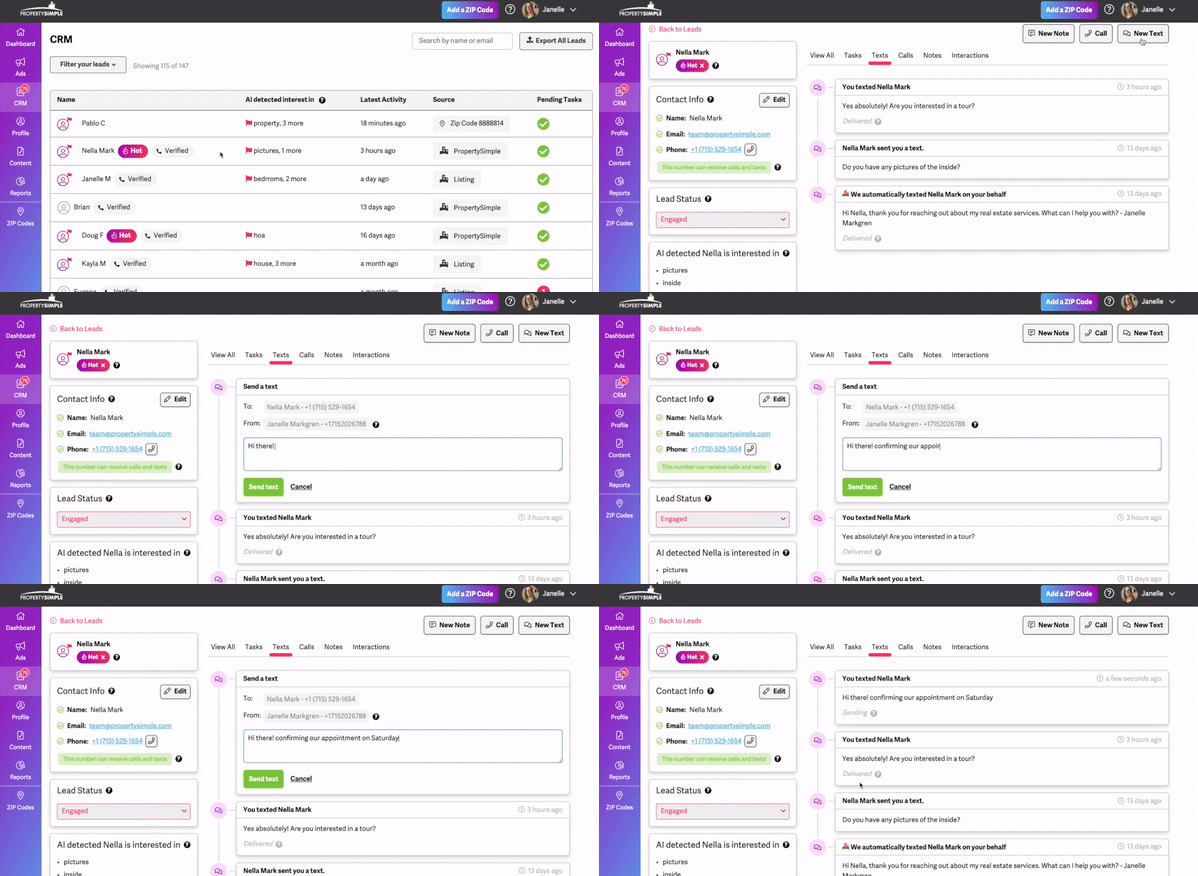
In the highly-speedy real estate industry the time is the primary currency. Agents constantly have to balance lead generation, communication with clients selling, transaction coordination and many more, which often leads to burnout and missed opportunities. Automation is the only way to change a Customer Relationship Management system. Automation moves a CRM from being a static database to an active intelligent, intelligent assistant that operates 24/7. It eliminates the tedious, lengthy work that agents do to focus on the most important tasks of their job: building relationships with customers, negotiating deals and providing strategic direction. Automation does not just increase efficiency, but also creates consistency, reduces error, and allows a single agent to perform in the same manner as an entire organization. The next 10 points outline the significance of automation within real estate CRMs. They also explain how this can assist agents to simplify their work.
1. Automatic Lead Capture and Distribution
As soon as a client is interested in your product or service online it is possible to start the clock. Automated lead capture makes sure that there are no leads left unnoticed. When a form from the agent's website, Zillow.com, Realtor.com, etc. is submitted to a CRM system, it immediately collects the lead's information and creates a record for that contact. In teams, the automation will distribute leads according to predetermined rules. For instance, geographic territory, or rotation. This eliminates manual entry of data and ensures that new opportunities are processed in a systematic, immediate way, all the time.
2. Lead nurturing using drip-marketing
Many leads aren't ready buy right away. Manually following up on hundreds of leads simultaneously is not feasible. Automation solves this issue through the use of customizable emails and text drip campaigns. The lead will be automatically added to a series of welcome emails which provide valuable content, such as neighbourhood guides, videos on the home buying experience, and monthly market updates. This "set-it-and-forget-it" system keeps the agent top-of-mind, nurtures trust, and methodically moves leads through the sales funnel without daily manual effort, ensuring consistent communication with the entire database.
3. Behavior-Related Communication
Advanced automation is able to send messages that are hyper-relevant depending on the lead's behaviour. The CRM can be configured to track the activity of a lead and trigger automated communications according to specific actions. Anyone who visits a certain property listing multiple times can be sent an email with additional information or similar listings. Instant alerts are sent when the property a lead has saved experience a reduction in price. The user will feel listened to and proactive due to this highly personal and quick response.
4. Automated appointment scheduling and reminders
The emails that are sent back and forth to schedule a meeting, consultation call, property show or meeting consumes a large amount of the time an agent spends. CRM automation can be integrated into calendar applications such as Calendly or integrated scheduling software. This allows customers and leads to make appointments by clicking the link in an email or a text. The system automatically syncs to the agent’s agenda in order for double-bookings to be prevented. It can also send automated reminders (24 hours before and 1 hour prior to the appointment) to minimize non-shows.
5. Transaction Milestone and Task Automation
Real real estate transactions involve a complex series of tasks and deadlines. Automation can help organize the process. CRMs can initiate a sequence of events once a contract is changed into "Pending". This could include the sending of a welcome packet to clients and scheduling deadline reminders including appraisals, closing dates and so on. This reduces the administrative burden and provides the highest quality service to your clients.
6. Automated Social Media Posting and Content Distribution
Maintaining a constant and active social media presence is vital for brand building but is often ignored due to time constraints. Automated CRM tools can be used to schedule posts across various platforms ahead of time (Facebook Instagram LinkedIn). Agents can build an archive of content, such as data on the market, customer testimonials and home maintenance tips, that will be published automatically by the system according an established schedule. This will create a continuous stream of marketing materials without the need for manual posting every day.
7. On Autopilot, you'll be able to cultivate your area of influence (SOI).
A representative's previous clients and referral networks are the foundation of their future business. It's impossible to maintain contact manually with hundreds contacts. Automation makes the process easier. The CRM is able to join customers who have been with the company for an ongoing nurturing program. It can send them holiday greetings and messages to wish them a the anniversary of their wedding. The CRM is able to request reviews and referals after the closure. This nourishing system keeps the relationship warm and encourages referrals and repeat business.
8. Automated Performance Analysis and Reporting
Understanding business performance is key for growth, but preparing reports manually can be a tiring task. The reporting features of a CRM create and forward key performance indicators (KPIs) directly to the agent's or brokers' email on a daily, weekly or monthly basis. The reports may contain data on new leads source, lead sources, conversion rates, pipeline value and closed sales. This gives you analytics based on data that enable you to take quick strategic decisions without needing to work for hours in a sheet.
9. Automated Alerts and Notifications to be used for internal use
Continuous communication is essential to ensure the team's unity. Internal automation helps streamline the process. The CRM is able to notify a transaction coordinator when the new deal is added to their pipeline. It could notify a manager of a team that a key lead is not active for a specified time, prompting manual follow-up. It is also a way to remind an agent that a certain task is approaching the deadline. This results in a seamless, self-reminding system that increases teamwork and accountability.
10. Automated Document generation and E signature requests
It's a hefty amount of paperwork needed to finish an actual estate transaction. Automating the process can simplify it through the use of templates for documents like disclosure forms as well as buyer's representation agreements, and listing contracts. Once the documents are created the system will then automatically send these documents via secure links to clients and will request electronic signatures. The system then monitors the status and sends automated reminders to the client until the document has been signed. This makes it easier for signing documents and printing them, and then tracking them down, which speeds up the pace of business and provides an seamless digital experience for all. View the recommended wealthy-crm.com real estate for website recommendations including email crm, real estate agent marketing, leads for realtors, customizable crm, sales automation software, sales automation, best crm software, best crm for small companies, personalized crm, email crm and more.
Top 10 Ways Crm Software Can Personalize Client Interactions For Real Estate Agents
The real estate agents who stand out in this field are those who can tailor their interactions with their clients. This is due to the fact that the real estate industry is built on trust and relationships. Today's clients want more than transactional services. They are looking for a partner to understand their specific needs, keep track of their preferences, communicate with relevance, and show care. Customer Relationship Management software (CRM) is the technological basis that allows this kind of personalized service to be offered in a large scale. Instead of being a cold, impersonal database, a modern CRM serves as a dynamic memory bank and a smart assistant for the agent. It gathers many details from each interaction and utilizes this information to inform the future communication. Each touchpoint will feel appropriate, timely, and unique to the user. This approach to personalization can transform the experience of customers from generic and unauthentic to authentic. It also fosters greater loyalty, more referrals, and also helps to build an excellent reputation for outstanding service. The following ten points detail the specific methods that CRMs allow agents to personalize interactions and dramatically improve the relationships with clients.
1. Centralized client history that helps contextualize conversations
A CRM is the sole source of truth for each client interaction. It automatically logs each email, each call (with notes), text message and meeting. Before any conversation, an agent will be able to quickly review the entire history. This lets them pick up an ongoing conversation with ease, reference a personal detail discussed weeks ago ("How did you feel about your daughter's high school graduation? This allows them to keep a conversation going that started several weeks ago, or to refer back to an event they have discussed (e.g. "How did you feel about your daughter's graduation?") or address a concern the client raised. This consistency shows respect and shows that the customer is valued as an individual and not just as a transaction in business. This creates a immediate connection with them, and also increases trust.
2. Monitoring specific properties and receiving notifications based on your preferences
The preferences of a client are closely tied to personalization in real estate. A CRM that integrates with the MLS enables real estate agents keep track of the properties that a prospective client has viewed. This allows agents to provide more than generic alerts for new listings. They can send a customized email saying, "I saw you were interested in the colonial located on Maple Street. Three homes share the same features, but with they have a larger backyard. Perhaps the house located on Oak Avenue you loved just had a price reduction. This kind of proactive and motivational communication proves that the agent is attentive to the customer and actively working on their behalf.
3. Automated Lifecycle and Milestone Marketing
Personalization continues long after the closing of an CRM. It can automate touchpoints depending on the "lifecycle" of a customer. For example it is possible to send a customized, but automated email on the anniversary of your purchase, with an estimate of the worth of your house. A personalized greeting can be sent out to customers on their birthdays or holidays. The system will send messages to previous clients prior to their renewal dates to renew homeowner's insurance, or remind them of seasonal home maintenance tasks. These timely, relevant messages ensure that the relationship with clients is warm and position them as lifelong advisors.
4. Segmentation of Hyper-Targeted Communication
It's not individual to broadcast the same message across all groups. CRMs allow agents to divide the database into very specific groups based on any data such as previous customers, first-time homeowners luxury home buyers, empty nesters, particular neighborhood enthusiasts, etc. This allows for a highly effective communications. First-time homebuyers can be provided with educational content about buying and mortgages, while luxury sellers receive reports on the top markets. This makes sure that each communication is valuable and relevant to the recipient, enhancing engagement.
5. Customized Document and Content Delivery
Instead of sending generic packets to clients, CRM gives agents to create and deliver personalized document sets without difficulty. With templates that include merge fields agents can design the prelisting package to a buyer that includes their client's address, name as well as the most recently sold similar properties in their region. If you want to send the weekly report on home searches to a buyer, an automated report can be generated. This level if the customization of official documents conveys an impression of professionalism.
6. Follow-up Sequences are automated and Individualized
While an automated system manages the timing of drip campaigns the CRM will ensure the content is still personal. With dynamic fields drip campaigns can be developed that consider the client's name, preferred location, or budget. Advanced systems can utilize behavioral triggers to create personalised follow-up messages. For example the case where a customer spends time on a page that talks about "home staging tips," they will be involved in a series of messages about preparing a house for sale, which makes the information feel like a direct response to their interest rather than a generic blast.
7. Reference and Acknowledgment Based on Source
If a new lead originates through a referral from a former client the CRM will track the source. It is possible to personalize your first interaction with a potential customer by mentioning how you are both connected: "Hello Sarah. I was thrilled when John Smith and Jane Smith suggested that I contact you." This instantly establishes trust and warmth. In addition, it triggers the agent to write a personalized thank-you note or gift to the referring client to strengthen the relationship with acknowledgement and appreciation.
8. Communication Preferences Logging and Adherence
Personalization is the process of determining the way a customer would like to be contacted. A CRM allows agents to log each contact's preferred method of communication--whether it's text, email, or a phone call--and their preferred time of day. Agents who stick to the preferences logged are respectful of their clients' boundaries and lifestyle. It may be difficult to make someone call if they prefer to text. However, respecting the preferences of the customer will improve the overall experience.
9. Personalization of Tasks and Reminders to Promote Proactive Service
Agents can set up customized reminders in CRM's task-management system for particular items for a customer that go beyond the deadlines for transactions. This could include an opportunity to remind clients to "Check in with the Miller family on the first day of school in their new area" or "Follow up with Tom Davis about his job transfer decision within six months." These proactive, thoughtful actions, which are automatically generated by CRM, allow clients to know that their agent isn't just interested in making a quick sale, but also is concerned about the long-term health of the client.
10. Integration with Personal Notes and Gifting Platforms
The most personal of forms of personalization is often beyond digital communications. Handwrytten, SendOutCards and other services can be incorporated into a CRM to automate sending personal notes in handwriting, for closings, referrals, or anniversaries. It can also keep track of client milestones, such as a baby's birth, or their love of golf, to remind agents to send their clients a customized present. The seamless combination of analog gestures and digital organization allows for the agent to personalize every interaction. Read the recommended best crm for real estate blog for blog advice including email marketing automation software, crm software for small companies, software for real estate investors, real estate leads, crm management tools, leads for real estate agents, data in crm, crm programs for realtors, simple crm, crm system meaning and more.