The "intelligence" that drives the robotic pool cleaners' actions is what sets them apart from basic and frustrating machines. They are also the difference between a machine that you can control with no hands. The way you navigate and the program determines the efficiency and effectiveness of the pool will be cleaned. Knowing these systems will allow you to select a robot capable of navigating your pool's layout effectively while reducing energy consumption and avoiding the hassles associated with untangling cables or repositioning units.
1. The core navigation types - Random and. intelligent.
This is the primary difference between robotic cleaning systems and other types of technology.
Random (Bump-and-Switch/Bump-and-Turn): Entry-level and older models use this method. The robot will move in a straight line until it hits an obstacle or wall, then turn to a random position and continue. The robot is not very efficient it misses numerous spots, is slower and consumes more power. It is susceptible to getting stuck and keep repeating areas that have been cleaned.
Smart (Algorithmic/Systematic): Mid-range to premium models use advanced navigation. The gyroscopes can be powered through accelerometers, optical sensors or algorithms in software which map the dimensions of the pool. The robot employs a specific and efficient cleaning pattern. One example is to scan the entire floor, then climb up walls in a systematic manner. This ensures complete coverage in the shortest amount of time.
2. Gyroscopic Navigator – a Guide to Understanding It
This is an extremely popular and efficient method for intelligent navigation. The robot includes an gyroscope that acts as a guide for the internal. It can measure the robot's movement and its orientation with great accuracy. This enables it to move in a straight line, and to create precise grid patterns across the pool. It is not influenced by the clarity of the water or lighting levels, making it extremely reliable.
3. The non-negotiable swivel cord.
Unrelated to navigation intelligence The swivel function is essential. Since the robot is constantly moving and changing direction, the cable will be twisted. A swivel device built into a connection or float allows the cable rotation 360 degrees. It will prevent it from getting tangled. A knotted rope could limit the robot's ability to reach, get it stuck, or cause cord damage.
4. Wall Climbing and Transition Intelligence
It is crucial to programme the robot so it is able to move from wall to floor and back.
Detection The most advanced robots use a combination sensor data and motor feedback to determine the presence of walls in their way.
Ascent/Descent They are programmed so that they approach at an angle and then they use their drive track as well as water thrust to ensure an easy climb. The most efficient models will be able to be clean up to the waterline. They will then stop and slowly descend without falling or kicking up debris.
Cleaning the Cove: The transition from the floor to the wall (the "cove") is a great place for debris. The navigation system has an operation that can be programmed to cleanse the area.
5. Anti-Stuck and Obstacle avoidance features.
Ladders, main drains, steps and ladders can all be obstacles within swimming pools. Programming can help mitigate issues.
Software Logic. Smart robots are programmed to recognize when they're stuck. (For example that if the wheels on their drive train aren't moving) They then execute rescue actions, such as changing direction and reversing.
Sensors: Some high-end models include forward-facing sensors, which can identify obstacles prior to them hitting them, allowing for an easier cleaning path.
Design: Low-profile designs and smooth edges are deliberately designed to allow the robot to move over obstacles, rather than be caught up in them.
6. Cleaning Cycle Programming and Customization.
Modern robots are equipped with several cycles that have been pre-programmed to be selected based on the need.
Quick Clean (1 hour): A quick daily cleaning that concentrates on the pool's floor.
Standard Clean (2-2.5 hours) Complete cycle that cleans floor, walls and waterline using an organized pattern.
Floor Only: Reduces energy if there are no debris on the floor, but there are walls that need cleaning.
Weekly Scrub/Extended Cycle: A scrub with a longer duration to allow for a more thorough scrub. Often, this involves being more attentive to walls.
7. The Impact of Navigation on Energy Consumption.
Smart navigation is directly tied to the efficiency of energy. A system-based robot is able to complete its work in a consistent and shorter timeframe because it covers the whole pool of paths without utilizing redundant ones. Random-path robots could have to work for 3-4 hours for the same job as a smart-nav robotic system, consuming significantly more power over its lifetime.
8. Tracks and Wheels: What is the difference? Wheels.
The way you steer your vehicle will affect its navigation and climbing capabilities.
Rubber Tracks - Provides the best traction on any surface, but particularly fiberglass and vinyl. They are good at climbing up and through obstacles. They are usually in the top-quality, robust models.
A lot of models come with wheels. Although they can be useful, they may not have the greatest grip on surfaces that are smooth. They can cause slippage or less effective climbing.
9. Waterline Cleaning Programs
This is a sign of sophisticated programming. Robots don't hit the waterline by accident; they have been programmed specifically to do so. The most effective models slow down near the edge of the water then increase the suction power or brush speed and travel along the entire perimeter for a set amount of time in order to eliminate the slime.
10. The "Set It and Forget It" Ideal for Weekly Scheduling.
The robot with a weekly timer integrated is the most convenient. You can program the robot to ensure that it will automatically start a cleaning cycle at a specific time and on a particular day (e.g. every Monday Wednesday, Thursday, and Friday at 10:10 am). This will ensure that your pool is cleaned frequently without needing to manually connect the robot into your system, thereby automating the cleaning process. Only robots that have stable, intelligent navigation will be able use this feature since you're not always there to help if they get stuck. Have a look at the recommended consejos para limpiar la piscina for more tips including cleaning robot for pool, technology pool, poolside cleaning, pool robot, pool sweeper robot, pro pool cleaner, pool cleaner nearby, cleanest pool, waterline pool, pool skimming robot and more.
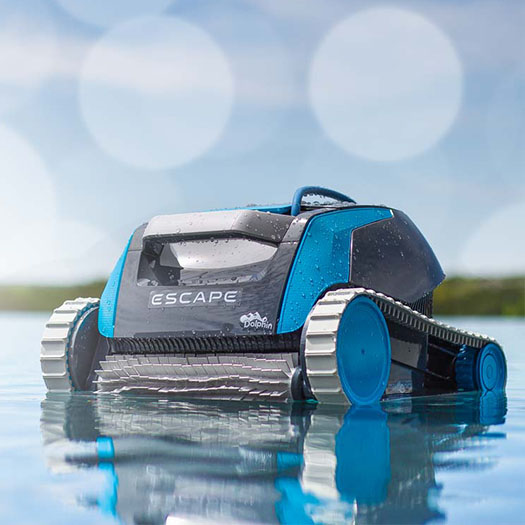
Top 10 Tips To Assist You To Maintain Your Pool Robot's Warranties, Reputation, And Support
The purchase of a robotic cleaner for your swimming pool is an important investment. This appliance is designed to work in an underwater, harsh atmosphere. Although the features that make up the robotic pool cleaner are attractive, their longevity value and security are affected by other factors, such as the reliability and strength of the warranty provided by the manufacturer as well as the accessibility of customer support and brand loyalty. These aspects serve as protection against premature failures and expensive repairs. A good warranty shows confidence in a product's durability. Brand reputations are built on trust and user satisfaction over a number of years. When an issue arises--which could happen with any complex device--efficient and knowledgeable customer service becomes the most important feature. Neglecting this research can turn an expensive purchase into a disconcerting and expensive paperweight.
1. How do you discern the warranty structure: parts, labor, and seals.
A warranty cannot be viewed as the entirety of it. It is necessary to understand it. What exactly is the 2-year warranty?
Parts The cost of this is the cost of replacement parts such as the control board, motor, or tracks.
Labor: This is essential. Does the warranty cover skilled technician labor in order to diagnose or repair the device? Some warranties are "parts only," leaving you with the possibility of a high price for repairs.
Seals and Waterproofing. These seals prevent water from getting into the motor or electronic. They are essential. Make sure they are covered throughout the entire warranty period. In the event of failure, these parts can cause a catastrophe.
2. Understanding "In-Warranty" Service Logistics.
The process of getting a broken robot repaired is a key consideration.
Mail-In Service: Most common. You must securely package the device and send it to an authorized repair center. It is important to use a secure packaging method to ensure that there is no damage during transit.
Local Authorized Service Centers: A significant benefit. Some manufacturers have local service centers which are licensed to complete warranty repairs. It is much easier to accomplish this than transferring the heavy, wet device across the nation.
Advanced Replacement Programs provide a high-quality level of customer service. The company delivers the replacement unit to you immediately usually before you've returned the defective one, minimizing the downtime of your pool.
3. The significance of a swivel cable guarantee.
The cable is the lifeline of a robot. The cable is subject to constant movement and UV radiation, as well as potential tangling. It's often a cause of failure. Look at the warranty and see if it mentions the cable. The cable must be covered for the entire duration of the warranty. Some manufacturers will treat it as "wear items" and will offer the warranty for a shorter period. This can be a major drawback.
4. Researching brand longevity and market presence.
The history of a brand is important. A company that makes cleaners for pools over the years has inevitably enhanced its designs, overcame issues, built an established supply chain and refined its parts. Amazon's robots are sold by fly-by night brands which disappear after a short period of time, leaving the consumer with a product that you cannot utilize and without a warranty. Make sure to stick with established brands that have an established track record.
5. The importance of longevity in Parts and Models.
Related to brand reputation Consider the length of time a particular model has been available for. A model with a fifth-year production history is likely to have fixed any design issues and possess a large inventory of spare parts (brushes or filters and even tracks) that will last for years. It's impossible to predict the reliability of a new model that's just been released.
6. Analyzing independent and user reviews to find patterns.
Review reviews to find recurring themes. Review the reviews in depth to find recurring themes.
Positive Signs to Watch For: Consistently praised their reliability and quiet operation across several seasons.
Negative patterns: Pay close pay attention to complaints of the same product repeatedly failing (e.g. cables that failed in 13 months or an engine seal that leaked) Poor navigation, and bad customer service. These patterns could expose brand weaknesses and common failure factors.
7. Evaluation of Customer Support Accessibility Prior to purchasing.
Before buying, verify the brand's customer service channels.
Phone Support Do you have a public telephone number? Call it. You can also judge the level of expertise of the person you speak to by seeing how long you're on hold.
Online Resources Do you have an online portal that contains downloads of manuals, FAQ sections, as well as tutorial videos? This is a sign of a commitment to customer self-service.
Email/Contact Forms: Send a pre-sales question. Speed and quality of response are a good indicator of post-sales services.
8. A clear explanation of requirements for Warranty Registration and Requirements.
Understand how to activate warranty.
Is online registration required? Most warranties are automatically activated upon purchase. However, some require online registration.
Keep your original receipt. The receipt is needed almost all the time to prove a claim for warranty, as it confirms the date of purchase.
Authorized Retailers: Buying from an authorized dealer is typically required for warranty validation. Marketplaces that allow unauthorized third parties to sell products can invalidate your warranty.
9. Common Warranty Abuse Actions.
The warranty contract is one that you can breach. The most common actions that can invalidate the warranty are:
Extension cords are almost always banned due to the risk of voltage drop and safety risks.
Don't use the GFCI Outlet: Plugging the transformer into a non-GFCI outlet is a safety hazard and could void the warranty.
Open the Sealed Unit. If you attempt to fix the electronics, motor or other components yourself then the warranty will be void.
Brushes that are not OEM or filters made by third-party companies and not intended for the purpose of removing coverage.
10. After Warranty: Planning for the long-term.
Consider the whole duration of the product. What happens when the warranty expires?
Be sure to inquire about the costs for repairs that are not covered by warranty, like replacing a motor. Then, you can decide if repairs are more cost-effective than replacing the unit.
A reliable company will keep stock of parts for years even after the discontinuation of a model. If a brand is not as established, it may not be able to supply parts once the warranty has expired.
Serviceability - Some models include parts that can be repaired by the end user such as brushes and tracks. This prolongs the life of the device far beyond the warranty time and lowers the cost of ownership over time. Have a look at the best swimming pool robot cleaner for more tips including the pool cleaner, robotic pool cleaners for above ground pools, smart swimming pool, the swimming pools, pool robot, pool sweeping, robotic pool cleaner, swimming pool cleaners, swimming pool service companies near me, swimming pools stores near me and more.
